Flat Embroidery vs 3D Puff Embroidery on Clothing
Compare classic flat thread embroidery with raised 3D foam puff embroidery for caps, hoodies, and jackets.
Custom embroidery has always symbolized durability, prestige, and premium garment craftsmanship. When choosing embroidery for apparel collections, brand designers typically select between classic Flat Embroidery and dimensional 3D Puff Embroidery. Understanding how foam underlays and stitch densities work ensures your logos look razor-sharp.
Puff embroidery uses high-density EVA foam beneath dense satin stitches. Inspect our industrial computer embroidery job work in Mumbai using Tajima multi-head machines.
What Is Flat Embroidery?
Flat embroidery stitches decorative polyester or rayon threads directly into the garment fabric, lying flush against the surface. Modern computerized multi-needle embroidery machines can execute complex digitizing files with incredible precision.
Because the stitches lie flat against the cloth, flat embroidery is ideal for intricate multi-color crests, small cursive typography, fine line artwork, and corporate branding on business polos and t-shirts.
What Is 3D Puff Embroidery and How Is It Done?
3D puff embroidery (also called foam embroidery) creates a heavily raised, sculpted emblem that rises 2mm to 3mm from the fabric. A layer of high-density EVA craft foam is placed over the fabric before stitching.
As the machine operates, dense satin stitches wrap completely around and encapsulate the foam. The needle perforates the foam along the design perimeter, allowing excess foam to be cleanly torn away, leaving behind a rigid 3D badge.
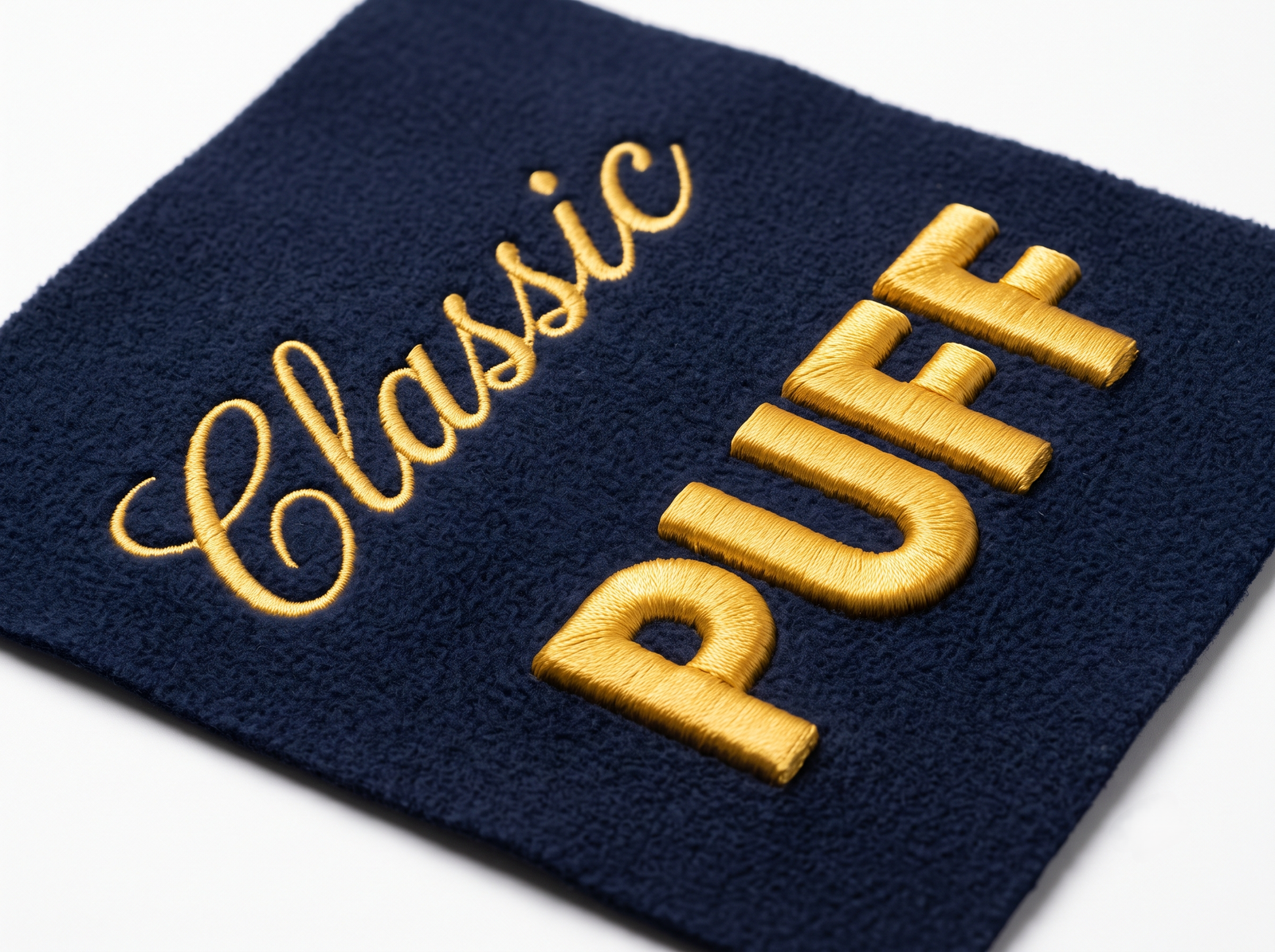
Photo Reference: Classic flat satin thread embroidery compared directly with 3mm raised 3D puff foam embroidery.
Key Differences in Artwork Detail and Fabric Weight
3D puff embroidery requires double the stitch density of flat embroidery to completely conceal the foam edges. Because of this high thread tension, puff embroidery cannot render fine details, tiny serif letters, or tight curves.
Furthermore, puff embroidery requires rigid, heavyweight substrates—such as structured snapback caps, beanies, letterman jackets, and 380+ GSM winter hoodies. On lightweight t-shirts, the dense foam will pull and pucker the thin cloth.
Side-by-Side Comparison
| Embroidery Attribute | Flat Embroidery | 3D Puff Embroidery |
|---|---|---|
| Visual Dimension | Flat, sits flush against fabric | Raised 2mm to 3mm 3D sculpted badge |
| Detail & Text Capability | High detail, small text down to 4mm height | Bold block letters & simple shapes only (>8mm) |
| Optimal Garment Types | Polo shirts, lightweight tees, dress shirts | Snapback caps, beanies, heavy winter hoodies |
| Stitch Density Requirement | Standard commercial stitch density | Heavy double satin stitch density to cover foam |
| Durability & Water Resistance | Permanent (threads never fade or peel) | Permanent (EVA foam is water-resistant & durable) |
Strategic Recommendations for Clothing Brands
Use flat embroidery for executive left-chest logos, detailed heraldic crests, subtle wrist monograms, and polo shirts where clean elegance is key.
Use 3D puff embroidery for bold collegiate varsity initials, athletic team numbers, headwear center-fronts, and luxury heavyweight streetwear hoodie graphics.
Both embroidery techniques look stunning on heavy outerwear; view our custom streetwear jackets manufacturer in Mumbai line.
Frequently Asked Questions
Straightforward answers to the 5 most common questions on this topic.
Explore Related Production Lines

READY TO MANUFACTURE YOUR CUSTOM CLOTHING LINE?
Connect with our Goregaon West team to review premium fabric swatches, order sample prototypes, and receive custom bulk pricing.