Plastisol Ink vs Water-Based Ink: Pros, Cons, and Differences
Learn the difference between opaque plastisol ink and soft-hand breathable water-based screen printing inks for custom apparel.
In the world of commercial screen printing, plastisol and water-based inks represent two fundamentally different chemical approaches. Choosing between them determines how a t-shirt graphic feels against your hand, how breathable the shirt remains in warm weather, and how vibrant the artwork looks on dark fabrics.
Whether you need opaque, vibrant colors on black garments or an ultra-soft breathable feel on lightweight tees, our textile screen printing job work in Mumbai handles plastisol, water-based, and discharge inks.
What Is Plastisol Ink and How Does It Perform?
Plastisol is a PVC-based suspension that contains plasticizer liquids and color pigments. Unlike water, plastisol does not dry by air exposure; it must reach 160°C in a heat curing tunnel to fuse into a solid, durable plastic film.
Because plastisol forms a solid layer sitting on top of the fabric fibers, it provides exceptional color opacity. Bright whites, neons, and vibrant pastel inks pop brilliantly on black and dark cotton t-shirts without color bleeding.
What Is Water-Based and Discharge Ink?
Water-based inks suspend pigment particles in a water-soluble base. When printed and heat-cured, the water evaporates, allowing the color pigments to absorb directly into the cotton yarn.
Discharge printing is a specialized water-based technique that bleaches out the original dark fabric dye and replaces it with the target ink color. The resulting print has virtually zero hand-feel—the fabric feels completely soft and natural, as if the design was knitted into the shirt.
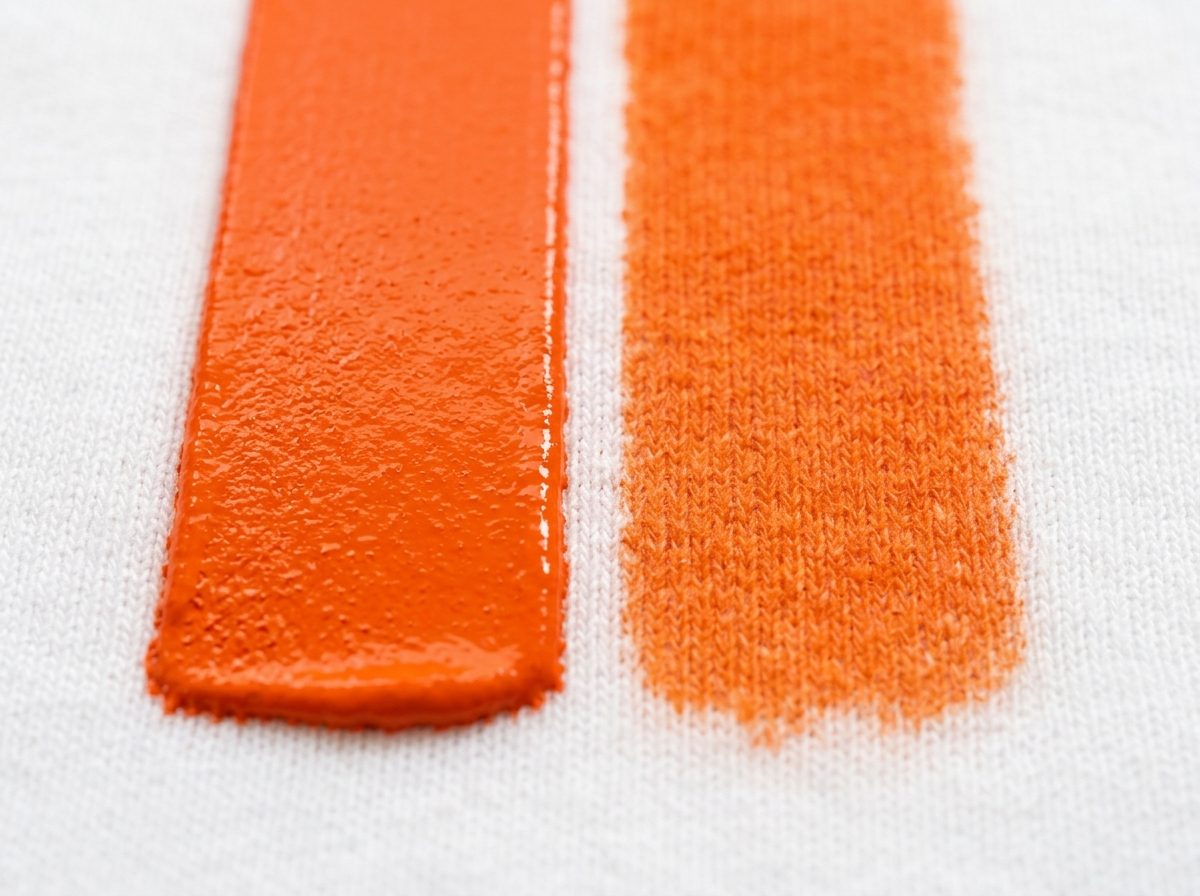
Photo Reference: Vibrant surface-layer plastisol ink compared with zero-hand-feel water-based discharge ink.
Key Differences in Hand-Feel, Breathability, and Eco-Impact
Large solid plastisol prints can create a rubbery 'sweat patch' on the chest because air cannot pass through the cured PVC film. In contrast, water-based ink preserves 100% of the natural breathability of cotton.
From an environmental standpoint, water-based inks clean up with simple water and contain zero phthalates or PVC resins, aligning with global sustainable apparel standards.
Side-by-Side Comparison
| Comparison Metric | Plastisol Ink | Water-Based & Discharge Ink |
|---|---|---|
| Surface Hand-Feel | Noticeable rubbery/smooth film on surface | Ultra-soft 'zero hand-feel' (dyes the fibers) |
| Fabric Breathability | Traps heat under large solid print blocks | Completely breathable through the artwork |
| Opacity on Black Fabrics | High opacity and brilliant color pop | Requires discharge agent to bleach dark dye |
| Detail & Half-Tone Sharpness | Crisp edges, excellent for vector logos | Soft edges, perfect for vintage & weathered art |
| Environmental Impact | Requires mineral solvents for screen cleanup | Eco-friendly, water-soluble, PVC/phthalate-free |
Selecting the Right Ink for Your Clothing Line
Choose plastisol ink if your collection features sharp corporate logos, athletic wear, 3D puff effects, or high-contrast graphics on dark hoodies where maximum color vibrancy is the top priority.
Choose water-based or discharge ink for summer streetwear, oversized loungewear, vintage band tees, and eco-conscious apparel collections where lightweight, breathable softness is paramount.
Water-based discharge inks work best on 100% cotton blanks; test this on our custom round neck t-shirt production.
Frequently Asked Questions
Straightforward answers to the 5 most common questions on this topic.
Explore Related Production Lines

READY TO MANUFACTURE YOUR CUSTOM CLOTHING LINE?
Connect with our Goregaon West team to review premium fabric swatches, order sample prototypes, and receive custom bulk pricing.