Single Jersey vs Interlock Fabric: Knitted Fabric Differences
Understand the difference between single knit jersey cotton and double knit interlock fabric for t-shirts and baby wear.
In the world of knitted cotton fabrics, Single Jersey and Interlock are the two most fundamental knit constructions. While single jersey powers 90% of global t-shirt production, interlock provides double-knit luxury and structural stability.
Compare front and back knit faces, curling edges, and tensile elasticity in the knit structure specifications in our fabric guide.
What Is Single Jersey Fabric?
Single jersey is knitted using a single set of circular knitting needles. This creates a fabric with two distinct sides: a smooth front face with tiny vertical V-shaped ribs, and a textured back with horizontal loops.
Single jersey is lightweight, naturally stretchy, and exceptionally breathable. When raw cut edges of single jersey are pulled, they naturally curl toward the front face.
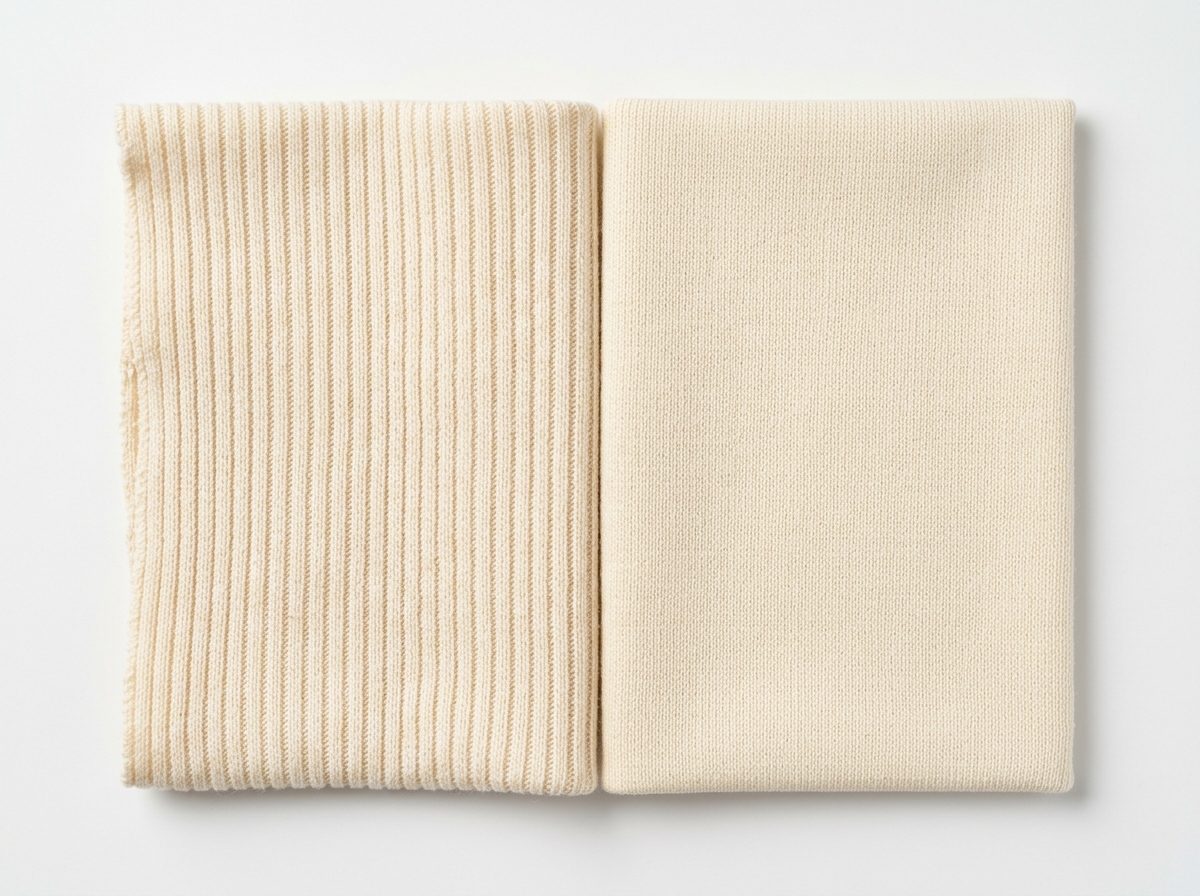
Photo Reference: Single jersey flexible single-needle knit compared with dense double-knit interlock fabric.
What Is Interlock Fabric?
Interlock is a double-knit fabric constructed using two sets of interlocking needles. This essentially creates two layers of single jersey knitted back-to-back in one continuous process.
Because both front and back faces are knitted simultaneously, interlock is completely identical and smooth on both sides. It is thicker, heavier, and completely flat—the edges do not curl when cut.
Key Differences in Thickness, Curling, and Stretch
Single jersey is lighter and more flexible, making it the supreme choice for airy summer t-shirts and modern oversized streetwear.
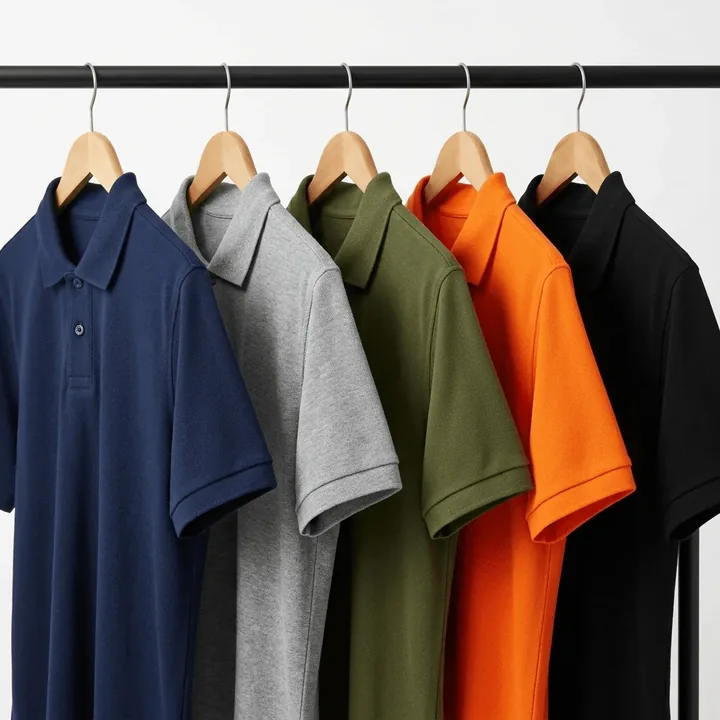
Interlock has greater dimensional stability and excellent shape recovery. It feels denser, holds its shape firmly around collar lines, and provides a luxurious, heavy drape favored in luxury polos, babywear, and athletic track jackets.
Side-by-Side Comparison
| Fabric Property | Single Jersey | Interlock Double-Knit |
|---|---|---|
| Knit Construction | Single needle bed (different front & back) | Double needle bed (smooth on both sides) |
| Typical GSM Range | 160 to 240 GSM (light to medium) | 220 to 320 GSM (medium to heavy) |
| Edge Behavior | Raw cut edges naturally curl | Raw edges stay completely flat |
| Stretch & Recovery | Natural horizontal stretch | High elasticity with firm shape recovery |
| Primary Applications | Standard tees, oversized streetwear | Luxury polo shirts, baby rompers, turtlenecks |
Choosing Between Jersey and Interlock
Choose single jersey cotton for everyday t-shirts, graphic streetwear collections, and lightweight casual tops where breathability, flexibility, and affordability are key.
Choose interlock cotton if you are manufacturing luxury apparel, high-end children's clothing, fitted turtlenecks, or garments where both sides of the fabric are visible.
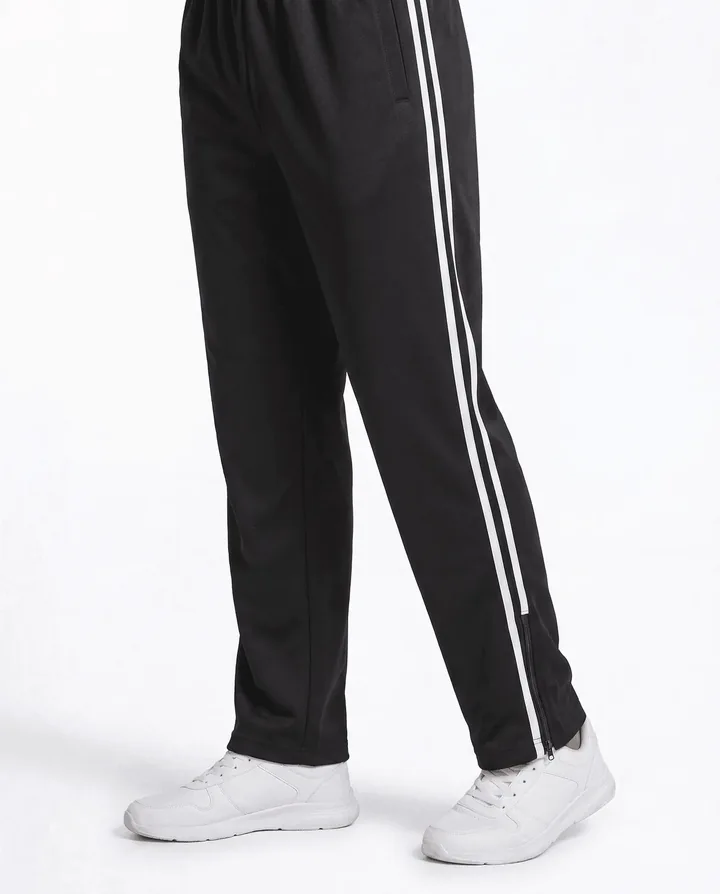
Interlock knit provides double-sided smoothness and substantial thickness, making it ideal for our heavy interlock trackpants and athletic bottoms.
Frequently Asked Questions
Straightforward answers to the 5 most common questions on this topic.
Explore Related Production Lines
READY TO MANUFACTURE YOUR CUSTOM CLOTHING LINE?
Connect with our Goregaon West team to review premium fabric swatches, order sample prototypes, and receive custom bulk pricing.