What Is 3D Puff Screen Printing and How Does It Work?
Learn what 3D puff printing is, how expanding foaming additives create tactile raised graphics, and best design practices.
3D puff screen printing has become one of the most defining aesthetic trends in luxury streetwear and contemporary fashion. Its rounded, tactile, raised texture turns simple graphic lettering and logos into dimensional art pieces that stand out from flat apparel prints.
Puff printing relies on chemical foaming agents calibrated under precise conveyor belt heat cure temps. Discover our specialized 3D puff screen printing job work in Mumbai for streetwear hoodies and tees.
The Chemistry Behind the Puff Effect
Puff printing uses standard plastisol ink mixed with a specialized micro-encapsulated blowing (foaming) additive. When liquid, the ink looks and handles like regular screen printing ink.
Once printed onto the garment and fed into a conveyor curing dryer, the heat activates the blowing agent at approximately 160°C. The chemical agent expands into millions of microscopic gas bubbles, causing the ink layer to rise vertically like baking dough into a smooth 3D bubble.
Where 3D Puff Print Looks Best
Puff print delivers its most striking impact on bold, medium-to-thick typography, vintage varsity numbers, and solid brand insignia.
Because the ink expands outwards as well as upwards, ultra-fine lines, delicate serif text, and tiny dots can blur together during expansion. Clean vector lines with adequate spacing produce the sharpest 3D results.
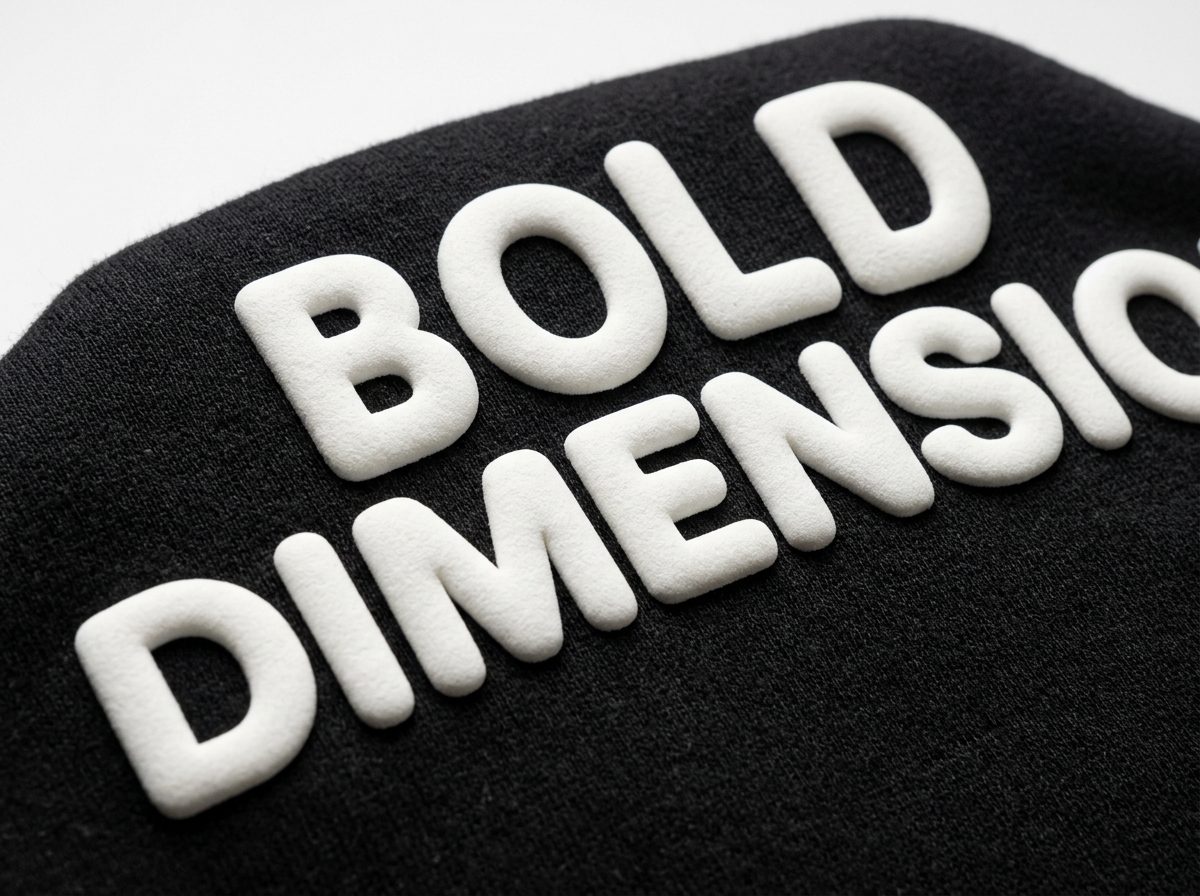
Photo Reference: Micro-encapsulated foaming ink rising into dimensional 3D tactile curves on heavy cotton.
Why Fabric Weight Matters for 3D Puff
Because puff ink expands and adds physical bulk, it performs best on medium to heavyweight garments such as 240+ GSM oversized t-shirts and 350+ GSM fleece hoodies.
On ultra-lightweight 140 GSM t-shirts, large puff graphics can pull and warp the thin jersey fabric when relaxing after the dryer.
Side-by-Side Comparison
| Print Characteristic | Standard Flat Screen Print | 3D Puff Screen Print |
|---|---|---|
| Visual Appearance | Flat, 2-dimensional color layer | Raised 3-dimensional rounded texture |
| Tactile Hand-Feel | Smooth surface film | Pillowy, tactile, foam-like cushion |
| Optimal Artwork Style | Detailed illustrations & fine line work | Bold typography, block logos, & shapes |
| Fabric Suitability | All fabric weights (140 to 450 GSM) | Best on heavy cotton (220 to 450 GSM) |
| Curing Temperature Precision | Standard curing tolerance | Requires tight heat control to avoid deflation |
Design and Production Recommendations for Fashion Brands
When creating tech packs for 3D puff printing, specify a 2mm to 4mm line stroke width to ensure clean vertical expansion without line collapse.
Combining flat screen printing with targeted 3D puff accents in a single design creates sophisticated depth that commands premium retail pricing.
Elevate your brand's drop by pairing high-loft 3D puff graphics with our heavyweight oversized streetwear blanks in 240+ GSM cotton.
Frequently Asked Questions
Straightforward answers to the 5 most common questions on this topic.
Explore Related Production Lines
READY TO MANUFACTURE YOUR CUSTOM CLOTHING LINE?
Connect with our Goregaon West team to review premium fabric swatches, order sample prototypes, and receive custom bulk pricing.