What Is High-Density (HD) Screen Printing on Clothes?
Discover what high-density (HD) printing is and how thick capillary stencils create sharp, 90-degree square-edged 3D graphics.
In high-end streetwear and luxury athletic apparel, High-Density (HD) printing stands out as one of the most technically demanding and visually striking embellishment techniques. Unlike traditional flat prints or rounded puff prints, HD printing creates ultra-crisp, 90-degree square-edged 3D graphics that resemble molded silicone plaques.
HD printing utilizes precision capillary films and thick emulsion screens to create razor-sharp vertical ink edges. Check out our high-density silicone and screen printing job work in Mumbai.
How High-Density Printing Creates Sharp Square Edges
Standard screen printing uses thin emulsion coatings that deposit a microscopic ink layer. In contrast, HD printing employs specialized capillary film stencils that are 200 to 1000 microns thick.
High-viscosity plastisol or silicone inks are layered repeatedly through these deep stencils. Because the stencil walls are vertically straight, the cured ink maintains sharp right-angle edges, flat tops, and crisp geometrical borders rather than collapsing or rounding out.
The Difference Between HD Print and 3D Puff Print
While both methods produce raised 3D graphics, their physics and visual aesthetics are completely distinct. 3D puff print relies on heat-activated foaming agents that bubble outward organically with soft, pillowy, rounded edges.
HD printing uses pure structural ink depth and thick stencils to build a rigid, architectural column of ink. The surface is completely flat and matte or glossy, giving garments a technical, high-performance aesthetic.
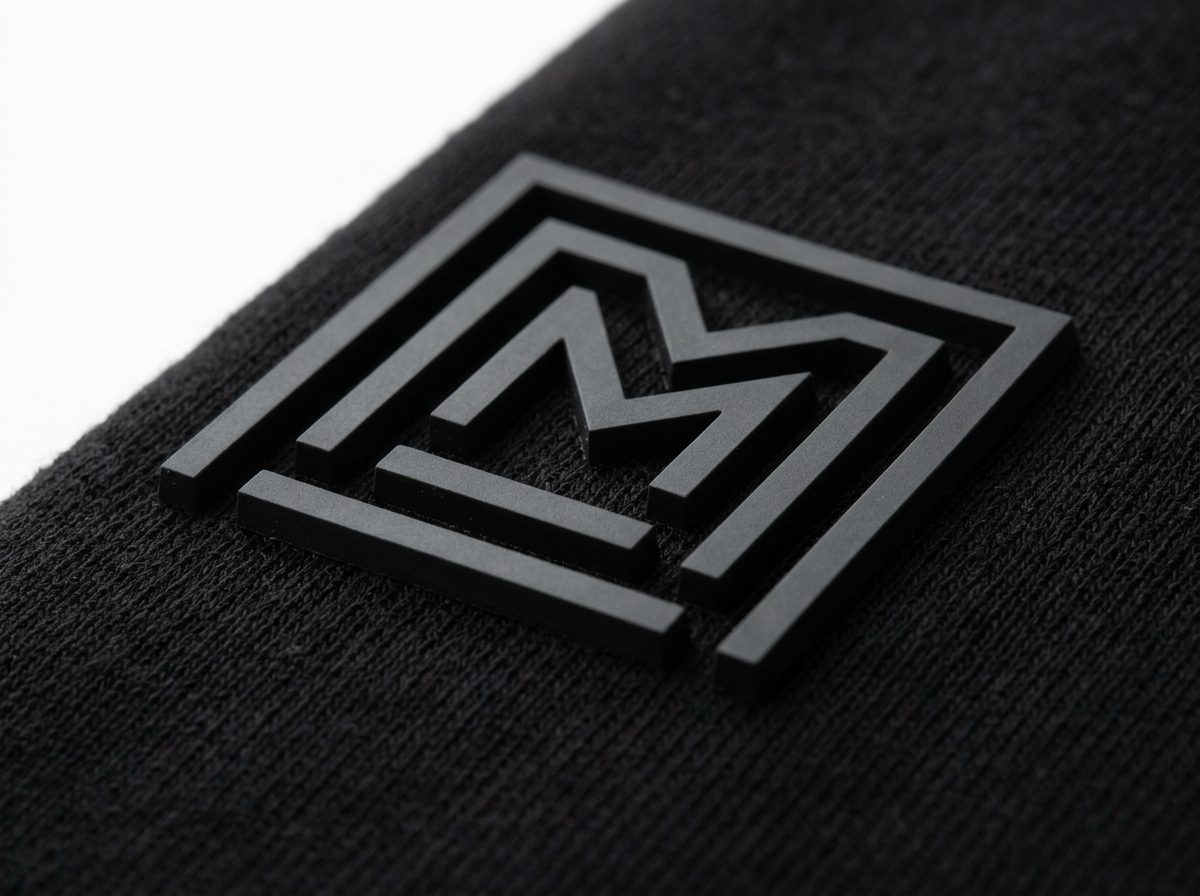
Photo Reference: Precision 90-degree square-edged high-density (HD) print creating architectural silicone-like branding.
Best Garment Placements and Fabric Requirements
Because HD ink layers are dense and relatively rigid, they perform best on stable, heavyweight fabrics such as 240+ GSM cotton t-shirts, polo shirts, and 380+ GSM winter hoodies.
The technique is widely utilized for luxury chest badges, tonal sleeve branding, geometric tech typography, and sleek athletic brand insignias.
Side-by-Side Comparison
| Print Attribute | High-Density (HD) Print | 3D Puff Print |
|---|---|---|
| Edge Geometry | Sharp, 90-degree vertical square walls | Rounded, pillowy, curved edges |
| Top Surface | Completely flat, smooth, architectural | Convex, domed, bubble-like texture |
| Production Stencil | Thick capillary film (200–1000 microns) | Standard mesh with foaming ink additive |
| Aesthetic Feel | Technical luxury, silicone badge look | Vintage skate, collegiate, playful streetwear |
| Wash Durability | Highly durable against cracking & wear | Requires gentle washing to protect foam volume |
Production Considerations for Apparel Brands
HD printing requires experienced screen printers with specialized capillary exposure units and automated presses capable of applying heavy, consistent squeegee pressure.
Keep artwork lines at least 1.5mm to 2mm thick to allow the dense ink to clear the deep stencil cavity cleanly without leaving jagged edges.
HD branding looks exceptionally striking on minimalist chest logos across our custom drop shoulder t-shirts.
Frequently Asked Questions
Straightforward answers to the 5 most common questions on this topic.
Explore Related Production Lines

READY TO MANUFACTURE YOUR CUSTOM CLOTHING LINE?
Connect with our Goregaon West team to review premium fabric swatches, order sample prototypes, and receive custom bulk pricing.